
1.Processing Principles: How Low-Temperature Baking Reshapes the Nutritional Logic of Pet Food
The essence of baked pet food is to maximize the benefits of heat-sensitive components through a low-temperature, slow-baking process (typically between 60°C and 120°C, varying depending on the formula and equipment). Compared to high-temperature extrusion processes (above 130°C–180°C, accompanied by high-pressure extrusion), baking does not rely on instantaneous expansion after starch gelatinization, but rather on gentle dehydration to form a crisp structure. This difference directly brings three advantages:
(1)Lower protein denaturation and higher retention of natural amino acids (such as taurine);
(2)No need for additional oil or flavoring agents, resulting in a naturally dry kibble surface and reduced oxidation risk;
(3)Preservation of enzyme activity, especially beneficial for cats with sensitive digestive systems, as endogenous digestive enzymes help reduce the burden on the pancreas.
From an equipment perspective, the baking process demands higher requirements for temperature uniformity and dehydration curve control, which is one of the main directions of pet food machinery upgrades in recent years.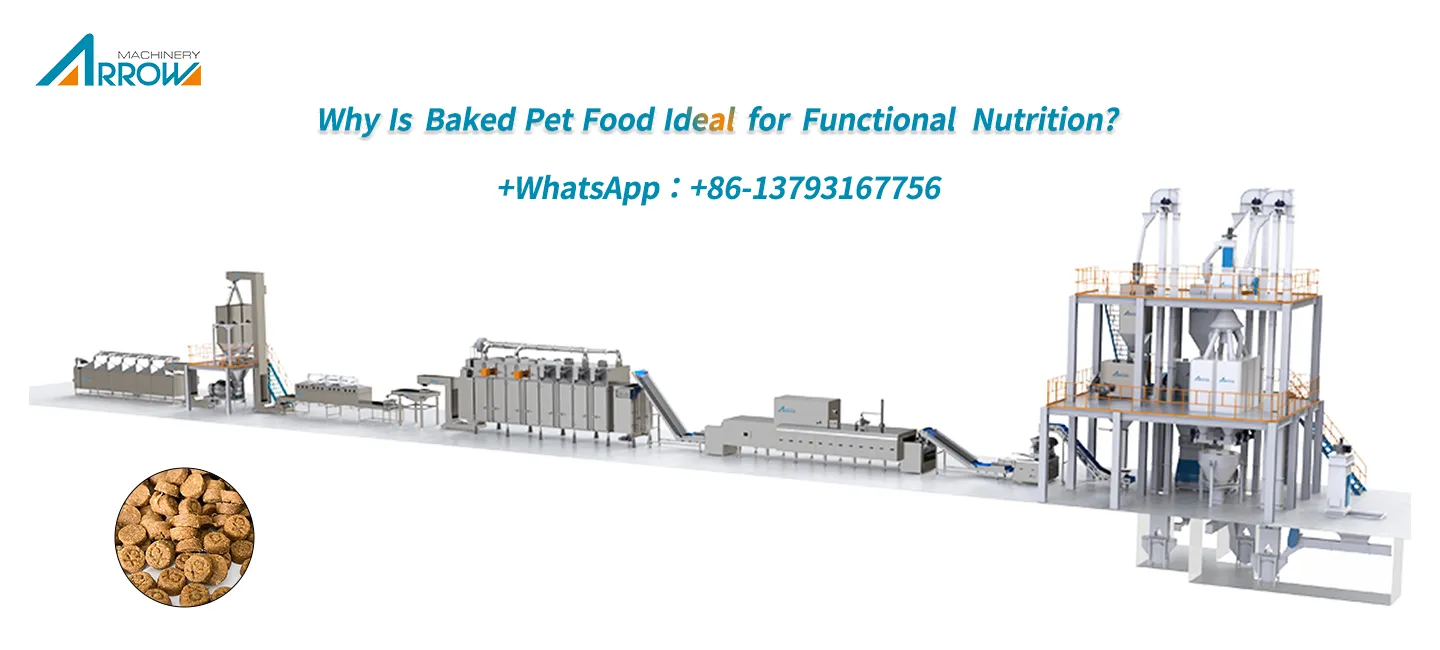
2.Which Cats Are More Suitable for Baked Pet Food? —Functional Matching Based on Physiological Needs
(1)Overweight or Obese Cats: Require High Protein + Need-Specific Low Fat
Baking processes support high fresh meat addition (some formulas reach over 90%) and eliminate the need for external oil coating, making it easier to achieve:
①Crude protein ≥ 40% (dry basis), crude fat controlled between 12%–18%, lower than the 18%–25% of traditional extruded food.
②Functional significance: High protein maintains lean body mass, low fat reduces calorie intake, and helps prevent fatty liver and insulin resistance.
(2)Cats with Vulnerable Digestive Systems: Focus on Enzyme Retention and Low Antigen Residue
Low-temperature baking reduces the formation of Maillard reaction byproducts (such as acrylamide) while avoiding excessive protein cross-linking caused by high temperatures. For cats that frequently have soft stools or are prone to inflammatory bowel disease (IBD), baked food typically:
①Free of artificial preservatives and sprayed palatability enhancers;
②Low pellet density, good rehydration, and slower gastric emptying.
(3)Picky Eaters: Natural Advantages in Texture and Flavor
Unlike the "false palatability" created by spraying hydrolyzed animal protein or oil onto the surface, the crispness of baked kibble comes from uniform dehydration, releasing a more natural aroma of the ingredients when chewed. In production practice, the non-spraying process also significantly reduces the risk of rancidity caused by oil oxidation, which is especially beneficial for cats with sensitive senses of smell.
3.Application Logic and Reference Dosage of Functional Additives in Baked Kibble
The mild nature of the baking process makes it an ideal carrier for heat-labile components such as fish oil, krill lipids, and chondroitin. The following are the current mainstream additive schemes and their mechanisms of action:
Element | Main function | Mechanisms related to arthritis/joint health | Common amounts added to the formula (as a percentage of dry matter) |
Fish oil (EPA+DHA) | Relieves inflammation and improves joint comfort | EPA helps reduce pro-inflammatory factors (such as PGE2 and LTB4) and reduce synovial inflammation. | 0.5%–2.0% (usually labeled as total fish oil content, equivalent to EPA+DHA ≥ 0.3%) |
Krill lipids | It contains phospholipid-type Omega-3, making the nutrients more easily utilized by the body. | Phospholipids bind to EPA/DHA, resulting in higher bioavailability through the blood-brain barrier and synovial membranes; naturally contains astaxanthin for antioxidant effects. | 0.1%–0.5% (dry basis), due to higher cost. |
Glucosamine hydrochloride | Promote cartilage matrix synthesis | As a precursor to amino monosaccharides, it stimulates chondrocytes to synthesize proteoglycans and collagen. | 500–1500 mg/kg (i.e., 0.05%–0.15%) |
Chondroitin (mostly chondroitin sulfate) | Helps reduce the activity of cartilage-degrading enzymes | Competitive activity helps reduce matrix metalloproteinases (MMPs) and cartilage degradation; it also works synergistically with glucosamine. | 300–1000 mg/kg (i.e., 0.03%–0.10%) |
Note: The above are common addition ranges in the industry. The specific range should be based on the basic nutritional components of the formula and animal test verification.
Technical Support: Yandex






 +86-531-83146566
 info@arrowextrusion.com