
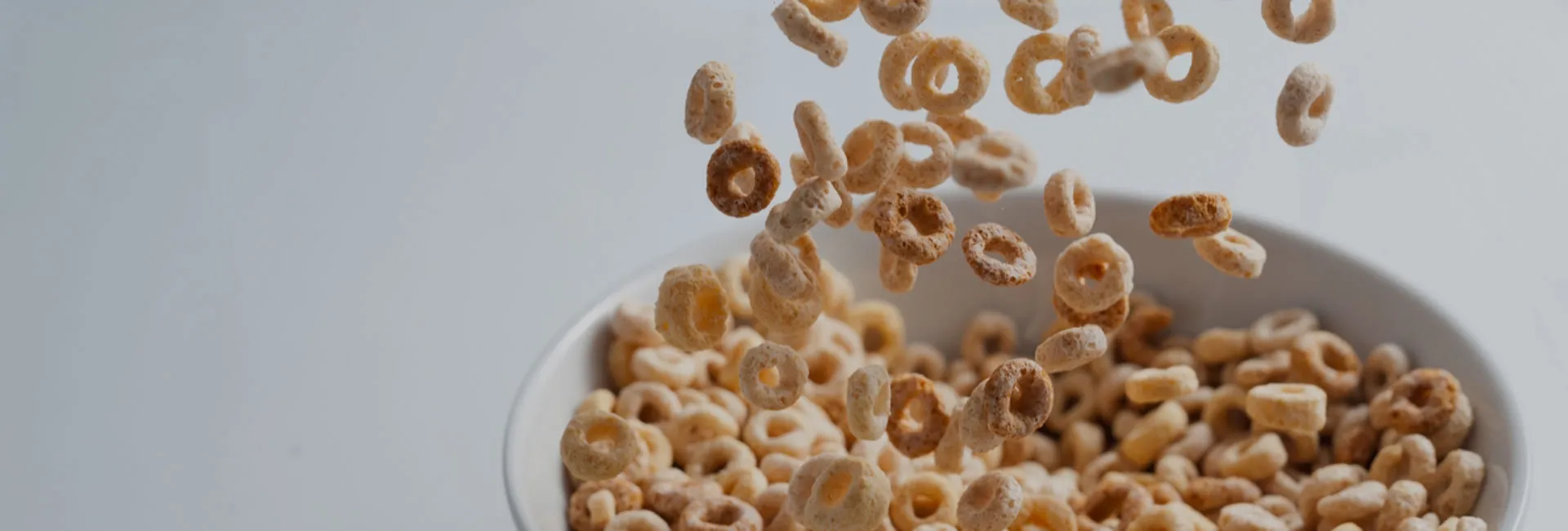
The global pet food industry is growing fast. Growing consumer demand is fueling this expansion. Demand continues to climb for premium dog and cat food, as well as high-meat formulations and grain-free recipes.
Demand is also rising for functional pet nutrition. For manufacturers, this brings major opportunities. But a successful pet food factory needs more than buying individual machines.
For overseas investors and pet food makers, choosing the right production line is important. It affects output and product quality. It also affects energy use and labor costs. As time passes, it affects ROI.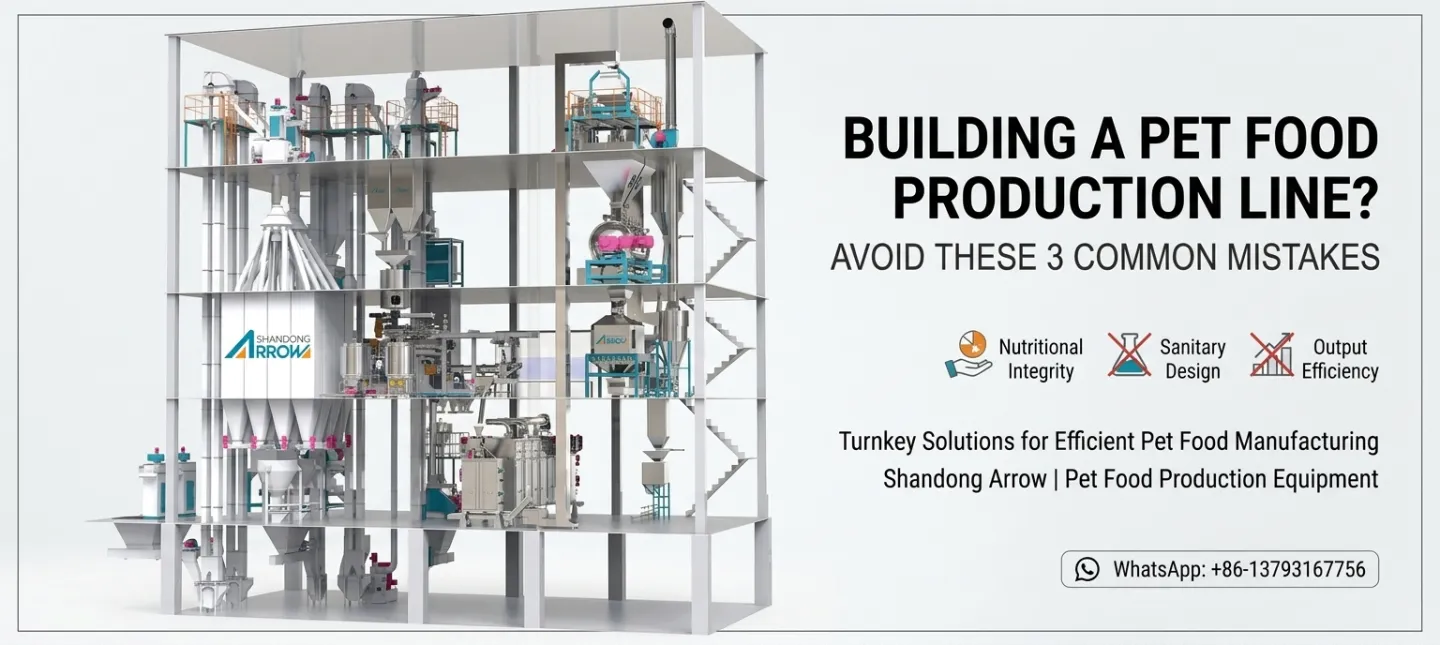 So, what mistakes should you avoid before investing in a turnkey pet food production line?
1.Three Common Mistakes When Setting Up a Pet Food Production Line
(1)Mixing Equipment From Different Suppliers
Purchasing equipment from many suppliers may seem cheaper, but weak integration can cause problems across production.
A typical dry pet food line includes raw material handling, batching, grinding, mixing, extrusion, drying, coating, cooling, and packaging. Differences in equipment capacity, conveying systems, control systems, communication protocols, and process parameters can create production bottlenecks.
A turnkey solution addresses these issues by planning the complete production system as one integrated project. We can consider equipment selection, plant layout, material handling, electrical control, utilities, sanitation access, and future expansion together.
The goal is not simply to purchase machines, but to create a stable and efficient production system.
(2)Choosing the Wrong Capacity or Extruder Configuration
Production capacity is critical when planning a new pet food factory.
Insufficient capacity can limit future orders, while excessive capacity increases equipment investment, energy consumption, and factory requirements.
The right capacity depends on your target output and product portfolio.
It also depends on formulations, operating hours, factory space, and expected business growth.
The pet food extruder is essential because extrusion is the main process for many dry dog and cat foods. Modern twin-screw extruders can provide flexibility for different recipes, kibble sizes, shapes, densities, and textures.
For premium pet food makers, the extrusion system should handle high-meat formulas. It should function well with freshly cut meat. It should support grain-free recipes. It should process functional ingredients.
Before choosing an extruder, ask:
①Can it handle my formulations?
②Can you quickly modify recipes when needed?
③Can it create kibble in various sizes and different shapes?
④Is the capacity suitable for future expansion?
⑤How well are temperature, pressure, and moisture controlled?
The best pet food extrusion equipment is not always the largest machine. The one that fits your products and production goals.
(3)Ignoring Actual Yield and Product Quality
Rated capacity does not always equal actual saleable output.
Excessive fines, broken kibble, irregular shapes, moisture fluctuations, and rework can significantly reduce production efficiency.
That is why drying, cooling, and coating are just as important as extrusion. A well-designed dry pet food line uses efficient extrusion, drying, cooling, and coating systems. It keep moisture levels and product quality consistent.
Coating systems can apply fats, flavorings, and palatability enhancers. Vacuum coating technology can improve the absorption and distribution of liquid ingredients while reducing surface residue.
For manufacturers, the main issue is not just equipment speed. It refers to how much dependable, market-ready output the plant can produce daily.
2. Which machines and tools are part of a fully equipped pet food production line?
A typical dry dog and cat food production process includes:
Raw Material Handling → Batching → Grinding → Mixing → Extrusion → Drying → Coating → Cooling → Packaging
Each stage has a specific role:
(1)Batching & Grinding: Ensure accurate ingredient ratios and suitable particle sizes.
(2)Mixing: Improve ingredient uniformity and batch consistency.
(3)Extrusion: Cooks and shapes raw materials into different kibble structures.
(4)Drying: Reduces moisture to achieve the required stability and shelf life.
(5)Coating: Adds fats, flavors, palatability enhancers, and other ingredients.
(6)Cooling: Reduces product temperature before final handling and packaging.
(7)Packaging: Completes weighing, filling, sealing, and product handling.
You can customize the production line for different products, capacities, formulations, factory layouts, and future expansion requirements.
3.How Can You Control Pet Food Production Line Costs?
The lowest equipment quotation does not necessarily mean the lowest total investment.
When evaluating pet food production equipment, consider:
(1)Equipment investment;
(2)Factory layout and construction;
(3)Installation and commissioning;
(4)Energy and utility consumption;
(5)Labor requirements;
(6)Maintenance costs;
(7)Actual production yield;
(8)Product changeover efficiency;
(9)Future expansion;
A properly designed automated production line can reduce manual intervention, improve consistency, simplify production management, and help control long-term operating costs.
A centralized PLC control system can also improve process monitoring and coordination between different production stages.
4.Why Choose a Turnkey Pet Food Production Solution?
For overseas manufacturers, a turnkey solution can simplify the entire factory-building process.
Instead of coordinating many machinery suppliers, a turnkey partner can support process planning, equipment selection, and factory layout. They can also guide installation, commissioning, and production use.
Shandong Arrow specializes in pet food processing equipment and complete production line solutions. It has over 30 years of engineering experience.
Solutions can be customized according to:
(1)Product type;
(2)Target capacity;
(3)Recipe requirements;
(4)Factory size;
(5)Existing utilities;
(6)Automation requirements;
(7)Future expansion plans
Whether you are building a new dog or cat food factory, the right equipment setup can boost efficiency.
You might be upgrading an existing production line.
Or you could be moving from OEM production to in-house production. It can also lower long-term operating costs.
5.Build a Pet Food Production Line for Your Business
A successful pet food factory is not built by simply choosing the cheapest machine or the highest-capacity extruder. The key is to match the pet food production line to your products and formulas.
Match it to your capacity goals, factory conditions, and future growth plans.
Shandong Arrow provides complete pet food production solutions. We cover equipment supply, process design, and factory layout planning. We also support equipment installation, recipe guidance, and application support. We provide installation supervision as well.
Considering starting a new dog or cat food manufacturing facility?
Share your product category, desired capacity, and country locati0n with us. Our engineering team can recommend a suitable pet food production line based on your production goals and factory requirements.
Technical Support: Yandex






 +86-531-83146566
 info@arrowextrusion.com