
With the continued growth of global premium pet food consumption, filled pet food processing solutions have become an increasingly popular investment for pet food manufacturers, OEM factories, private label brands, and new market entrants. Compared to traditional dry pet food production, filled pet food offers higher product value, better palatability, stronger product differentiation, and higher profit margins.
This guide comprehensively explains how to plan, design, and build an efficient pet filled food processing production line, covering production technology, equipment configuration, factory layout, investment considerations, and key success factors for long-term profitability.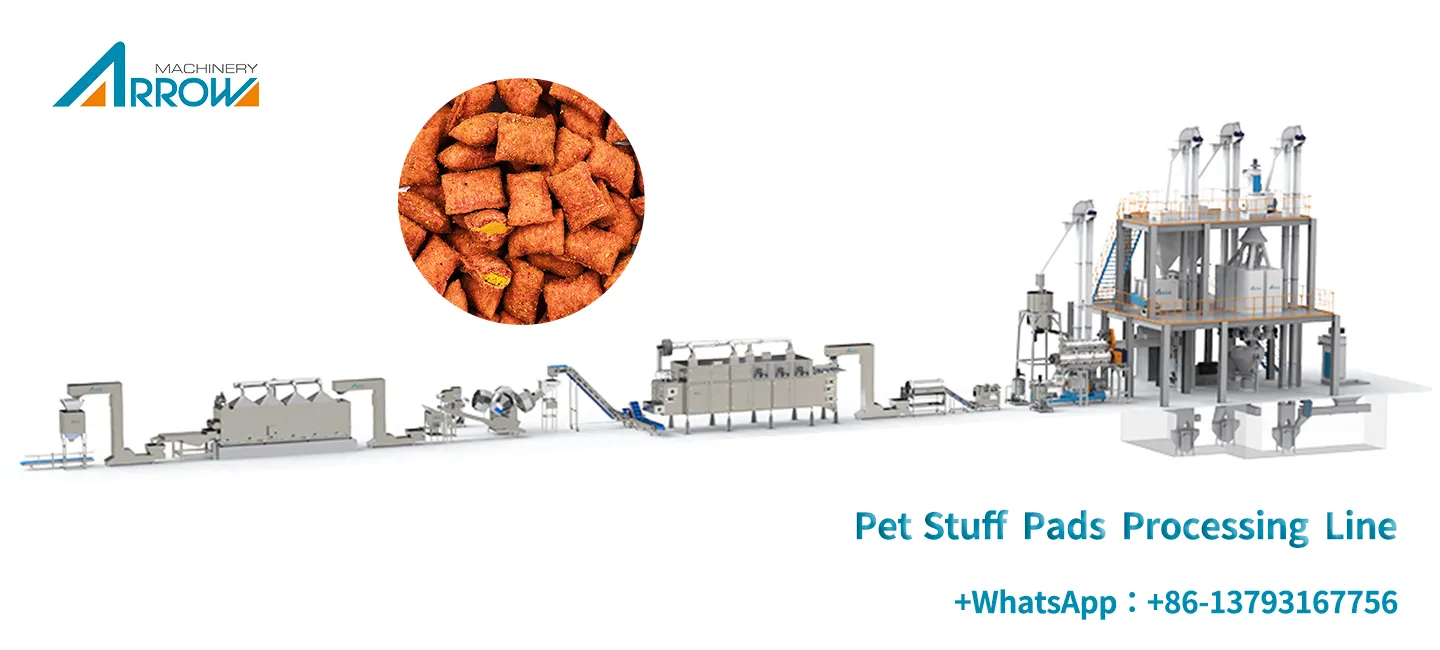 1. How to Define Your Filled Pet Food Product Before Choosing Equipment?
One of the most common mistakes first-time investors make is choosing equipment without clearly defining the final product. Successful pet food filling production begins with a clear understanding of the following:
(1) Target animals: dogs, cats, puppies, kittens, or small pets;
(2) Product structure: a crisp outer shell encasing a soft, nutritious filling;
(3) Product category: filled kibble, filled pet food, functional snacks;
(4) Filling type: the filling formula contains animal protein, nutrients, and oils. Special addition methods better preserve the nutrients and flavor of the ingredients;
(5) Production capacity requirements: 100-1000 kg/h, customizable to meet demand;
(6) Food safety and nutritional goals.
Different formulas require different processing parameters. Early product planning helps manufacturers avoid costly retrofits after installation and ensures faster market entry.
2. What equipment is needed for a complete pet food filling production line?
Many buyers believe that a pet food filling production line only requires an extruder and a filling system. In reality, stable production depends on a fully integrated processing solution. A complete pet food filling production line typically includes:
(1) Raw material preparation system: raw material storage and conveying, grinding equipment, automatic batching system, pet food mixing machines.
(2) Extrusion and filling section: pet food twin-screw extruders co-extrusion filling system, cutting and shaping equipment.
(3) Drying system: food dryer machine commercial.
(4) Flavoring and coating section: roller coating system.
(5) Cooling and screening: cooling conveyor, product screening system.
(6) Packaging system: automatic weighing equipment, vertical packaging machine, secondary packaging solutions.
3. Why is co-extrusion technology the preferred solution?
Modern pet food filling production relies primarily on co-extrusion technology, rather than post-filling processes.
(1) Key advantages include: continuous and efficient production, stable product structure (minimal filler leakage), flexible adjustment of shell-to-feed ratio, suitability for high-fresh-meat formulations, better product consistency, and better retention of heat-sensitive nutrients in the filling.
(2) For most high-end pet food applications, twin-screw extrusion technology remains the preferred choice due to its superior raw material adaptability, stable feeding performance, easier formula adjustments, better process control, and consistent product quality.
These advantages help manufacturers develop differentiated products and stand out in the increasingly competitive pet food market.
4. What is the cost of a pet food filling production line?
One of the most frequently asked questions by investors is the total project budget.
The actual investment depends on several factors: capacity, level of automation, product formula complexity, factory infrastructure, packaging requirements, and regional utility costs.
Typical project categories include:
(1) Small-scale production lines, suitable for: startup pet food brands, pilot production, and market testing projects.
(2) Medium-scale production lines, suitable for: regional manufacturers, private label development, and OEM pet food factories.
(3) Large-scale industrial production lines, suitable for: high-volume commercial production, international pet food brands, and export-oriented manufacturers.
In addition to equipment investment, buyers should also consider: installation, commissioning, utility consumption, electrical and gas systems, operator training, trial production, spare parts inventory, preventative maintenance, and food safety certification.
Many manufacturers focus only on equipment pricing, underestimating the project's hidden costs. In actual projects, poor planning can lead to increased total investment due to layout changes, utility upgrades, and low production efficiency.
5. How can manufacturers reduce investment risk?
The most successful pet food projects focus on total lifecycle cost, not initial equipment price.
To reduce risk, manufacturers should assess:
(1) Production flexibility:
A well-designed production line should support multiple products, including: dry pet food, filled pet food, aquatic feed, etc. Flexible production methods allow manufacturers to respond quickly to changing market trends without investing in additional production lines.
(2) Food safety and hygiene design:
The global pet food market has increasingly stringent food safety standards.
Recommended equipment features include: food-grade stainless steel construction, hygienic welding design, easy-to-clean structure, self-draining system, easy cleaning, and reduced risk of contamination.
These features streamline the audit process and help manufacturers meet international food safety requirements.
(3) Turnkey Project Support:
A single supplier can provide: process design, equipment manufacturing, factory layout planning, installation and commissioning, staff training, formula support, and technical after-sales service.
This approach shortens start-up time, reduces communication barriers, and improves project accountability.
6. Key Success Factors for Profitable Pet Food Businesses
Manufacturers who achieve long-term success typically focus on three key areas:
(1) Product Differentiation: High-quality fillings, unique shapes, functional ingredients, and customized formulas create stronger market positioning and higher profit margins.
(2) Operational Efficiency: Balanced capacity, automation, and optimized energy consumption directly impact profitability.
(3) Reliable Equipment Partners: Experienced pet food processing equipment manufacturers can help you avoid costly mistakes during project planning, installation, and production start-up.
7. Conclusion
Building a successful pet food production line is not simply about buying machinery. It requires a complete manufacturing system that integrates product innovation, capacity planning, food safety, process stability, and long-term operational efficiency.
Whether you're launching a new pet food brand, expanding an OEM factory, or investing in a large-scale pet food production facility, careful planning in the early stages will help reduce costs, accelerate market entry, and maximize long-term benefits,Shandong Arrow Machinery possesses extensive experience in pet food processing technology and can provide customized solutions for high-end pet treats such as dry pet food, wet pet food, filled pet food, and dog chew . From process design and equipment manufacturing to installation, commissioning, and technical support, Shandong Arrow helps pet food manufacturers build efficient, reliable, and future-proof production facilities.
By partnering with Shandong Arrow, pet food manufacturers can confidently enter the booming high-end pet food market while achieving higher production efficiency, consistent product quality, and sustainable business growth.
Technical Support: Yandex






 +86-531-83146566
 info@arrowextrusion.com