
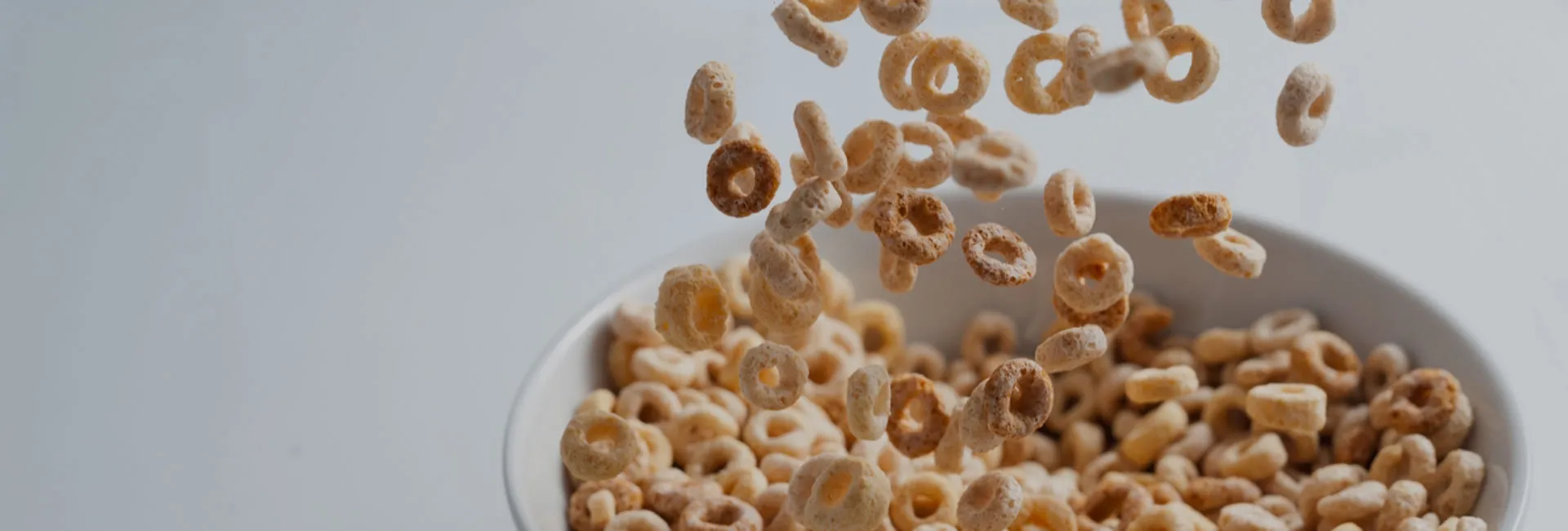
In the production of baked pet food and twin-screw extruded dry kibble pet food, "oil seepage" is one of the most common and troublesome quality problems—oil spots, oil leakage, and a sticky surface directly affect appearance and shelf life. Why does oil always "not stay"? We'll start by discussing the underlying logic of the meat processing system and then provide solutions from the equipment perspective.
1. Why does fat easily "leak out"?
In a meat filling mixture (meat + fat + water + protein + starch + seasonings), fat is a nonpolar molecule, while water is a polar molecule—oil and water are inherently incompatible.
To stably disperse fat, it must be broken into sufficiently small particles and encapsulated by proteins or emulsifiers. Ideally:
(1)Fat is dispersed and surrounded by a protein/water colloid system;
(2)The smaller the fat particles, the more stable the system;
(3)The larger the fat particles, the easier they are to aggregate → ultimately "leak out".
2. Two "States of Existence" of Fat in Meat Products
State | Features | Outcome |
Emulsified fat | Encapsulated by proteins/emulsifiers, mixes with water | Stable, no oil production |
Free fat | Not encapsulated, aggregates freely | Product oil production, oil spots, sticky surface |
Oil seepage, oil leakage, and greasy surface of pellets, common problems in pet food production, are essentially due to excessive free fat.3. Limitations of Traditional Solutions
Common industry methods include:
(1)Process improvement: controlling chopping temperature, salt concentration, and addition order—but with limited technological potential;
(2)Formula modification: reducing oil or using protein powder—affecting cost and palatability;
(3)Starch adsorption: only physical adsorption; the oil is not truly stabilized and will still precipitate at high temperatures or during storage.
These methods all revolve around a core problem: they do not truly change the state of the oil.
4. Fundamental solution from an equipment perspective: Pre-emulsification + extrusion molding control
A truly stable solution is to pre-emulsify the oil into a stable oil-in-water structure during the mixing/emulsification stage, rather than relying on subsequent processes to "remedy" the situation.
This is precisely the core value of our company's twin-screw extruder and baking food molding machine:
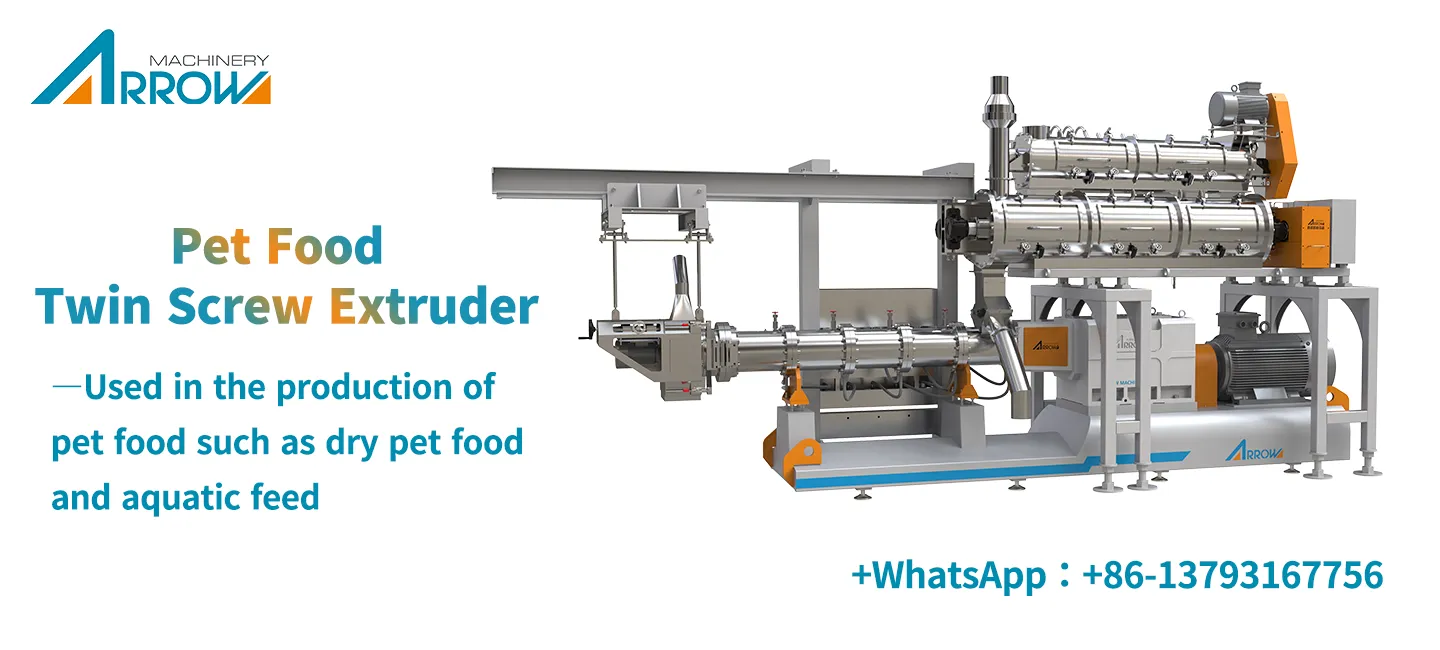
(1)The Strong Shear Emulsification Capacity of Twin-Screw Extruders:The twin-screw structure provides high-intensity shearing, mixing, and dispersing action, allowing for thorough binding of oils and proteins/emulsifiers at the material stage, forming a stable submicron-level emulsion system—significantly reducing free fat and lowering the risk of oil leakage.
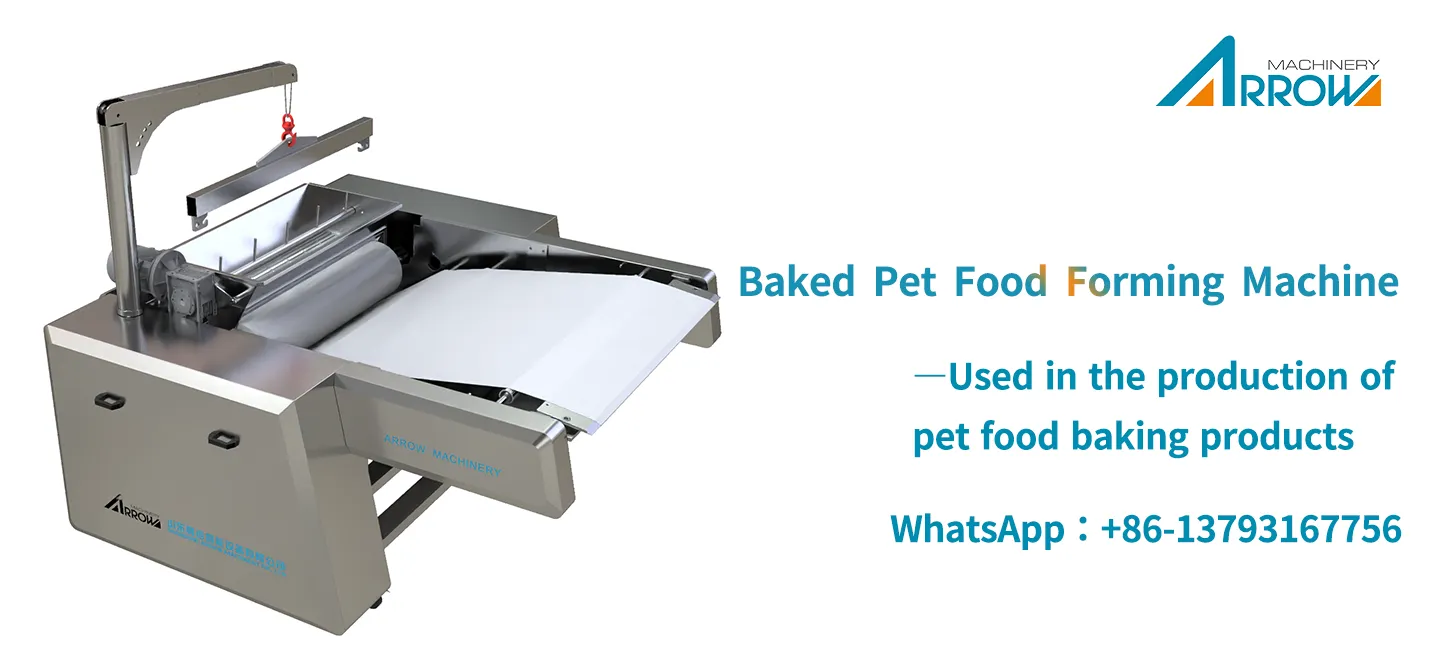
(2)The Advantages of Low-Temperature Processing in Baking Food Molding Machines:Compared to high-temperature extrusion, low-temperature baking (60-120℃) causes less damage to the already formed emulsion structure, resulting in a lower probability of oil migration and aggregation. The equipment's precise control over temperature uniformity and dehydration curves directly affects the dryness of the finished product surface.
(3)Synergy Between Process and Equipment:We not only provide single machines but also complete process solutions from mixing to emulsification to extrusion to molding, helping customers control oil yield within an acceptable range without significantly increasing formulation costs.(4)Summary:Oil leakage in pet food, while superficially a formulation issue, is essentially a problem with the equipment's emulsification and dispersion capabilities.
Our twin-screw extruders and baking grain forming machines help customers:
✅ Reduce free fat and lower the risk of oil exudation
✅ Improve pellet surface dryness and enhance appearance
✅ Extend shelf life and reduce returns and complaints
If you are struggling with oil exudation issues in your baking or extruded grains, please contact us for equipment and process recommendations tailored to your formulation.
Technical Support: Yandex






 +86-531-83146566
 info@arrowextrusion.com